

Oxford physicists create new family of Schrödinger's cat states
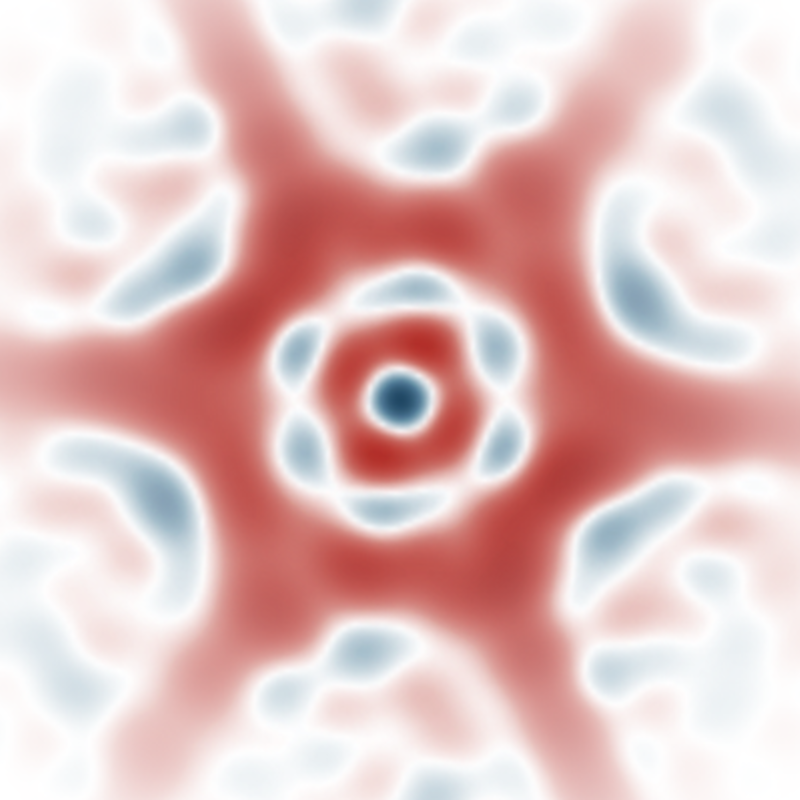
Reconstructed Wigner function of a superposition of two trisqueezed states; its sixfold rotational symmetry and regions of Wigner negativity reveal highly non-classical quantum interference in the ion’s motion.
Researchers at the University of Oxford have demonstrated a new family of quantum superpositions in which each component is itself a highly exotic quantum state — an advance that extends the toolkit available for quantum computing, sensing, and error correction. The findings have been published in Physical Review X.
In the new study, the researchers demonstrate a method for creating superpositions from a broad range of components that are themselves highly non-classical, thereby creating a new family of Schrödinger-cat-like states.
Read the full article here

